Dec 2025
On the Practical Difficulties of Going Elsewhen
The earliest mistake in the study of time travel was the belief that one merely had to arrive earlier. This assumption ignored the trivial inconvenience that nothing ever remains where it was. Planets migrate, stars drift, galaxies shear past one another, and space itself refuses to hold still long enough to be pointed at. A naïve jump backward therefore tended to deposit the traveler either in vacuum or inside something already using the space, which proved unpopular with both travelers and objects.
To address this, the first successful programs abandoned the idea of precision. Instead of aiming for exact coordinates, they treated time travel as an approximate relocation into a probabilistic volume of space. Arrival was guaranteed to be safe, if not convenient. One typically emerged somewhere near the intended era, several million kilometres from relevance, and spent the following months correcting the remainder of the error by ordinary propulsion. This was considered acceptable, as without time travel the journey would have taken centuries.
Long backward jumps, however, suffered from compounding inaccuracies. Prediction errors grew faster than computational improvements could contain them. The solution was counterintuitive but effective: instead of one large temporal displacement, the ship executed millions of very short ones. After each micro-jump, the navigation system measured how spacetime had shifted relative to the vessel and adjusted accordingly. Time travel became less like teleportation and more like walking in the dark while tapping the walls to learn their shape.
It was during these iterative corrections that something unexpected appeared. No matter the starting point or direction of travel, the required adjustments slowly curved toward a common reference. Not a location, but an axis — a direction of least correction. This hidden alignment bore a faint resemblance to the behaviour of Foucault’s pendulum, which had once demonstrated Earth’s rotation by refusing to agree with it. The implication was unsettling: the pendulum had not merely been revealing Earth’s motion, but hinting at a deeper inertial structure beneath it.
Even more troubling was the observation that this reference frame was not constant. Its drift was slowing, not smoothly, but in ratios suspiciously close to the Fibonacci sequence. The universe, it seemed, was not only rotating beneath observation but easing itself toward some quieter configuration, as though following an optimisation rule no one had bothered to publish.
Time travel backward proved possible to any point after the era in which these methods were discovered. Going earlier remained feasible but increasingly imprecise, as though history itself resisted being visited before it had been properly measured. This asymmetry was noted, documented, and largely ignored.
There were, inevitably, side effects. During one early survey, a crew identified a meteor-sized cluster of naturally formed diamonds in a stable pre-discovery orbit. A small quantity was retrieved and brought back to the program’s origin era, where it briefly destabilised commodity markets and permanently destabilised economic theory. The incident was recorded, regulations were written, and the phrase “diomcrash” entered official vocabulary as a synonym for avoidable stupidity.
In the end, time travel did not fail because it was impossible. It failed because it was imprecise, iterative, and required patience — qualities rarely associated with epoch-altering technology. It did not grant mastery over history so much as reveal that history, like navigation, depends on reference frames that only appear once one has made enough mistakes to notice them.
The universe, it turned out, was not hostile to time travel. It was merely unwilling to hold still for it.


Sep 2025
Brain Fog ---
Brain & Energy Helpers (cause → effect)
• Creatine → replenishes cellular energy (ATP) → less fatigue, sharper memory, reduced brain fog.
• MCT oil (coconut-derived) → rapidly converts to ketones → quick brain fuel, more mental stamina.
• L-theanine (from green tea) → boosts calming neurotransmitters (GABA, serotonin) → smoother focus, less anxiety.
• Caffeine (coffee/tea/cocoa) → blocks adenosine receptors → alertness, faster reaction time, but jitter risk.
• Cocoa (flavanols) → increases cerebral blood flow → better attention, mood lift, cardiovascular support.
• Omega-3 fatty acids (fish/flax/chia) → build brain cell membranes → improved memory, mood stability, reduced inflammation.
• Ginger → anti-inflammatory and pro-circulatory compounds → steadier digestion, nausea relief, subtle cognitive clarity.
• Ashwagandha → modulates stress hormones (cortisol) → calmer mood, resilience under stress.
• Rhodiola rosea → adaptogen that optimizes energy metabolism → less fatigue, more endurance.
• Ginkgo biloba → vasodilator and antioxidant → potential memory support, especially in older adults.
Short Walk in Nature 🌿
• Mild exercise → increases oxygen & blood flow to the brain → sharper thinking, reduced fatigue.
• Natural light → resets circadian rhythm → improved alertness and sleep quality later.
• Green environment → lowers cortisol and stress hormones → calmer, more focused mind.
• Rhythmic movement → activates “default mode” networks → mental reset, creativity boost.
• Break from screens → reduces sensory overload → clearer, less foggy headspace.
Net effect: Quick, sustainable lift in mood, focus, and energy.
⸻
Ice Plunge / Cold Exposure ❄
• Sudden cold shock → norepinephrine spike → instant alertness, mood lift.
• Vasoconstriction & rebound circulation → improved blood flow → clearer thinking after warming.
• Endorphin release → natural “high” → reduced stress and brain fog.
• Anti-inflammatory effect → may help immune balance & reduce fatigue.
• Resilience training → teaches nervous system regulation → steadier stress response over time.
Net effect: Powerful but short-lived clarity + mood elevation, like a reset button.
Why Extra Virgin Olive Oil (EVOO) is considered healthy
• Heart protection: Rich in monounsaturated fats that lower LDL (“bad”) cholesterol and improve HDL (“good”) cholesterol.
• Anti-inflammatory: Contains polyphenols and vitamin E that reduce oxidative stress and inflammation.
• Brain health: Long-term use is linked to slower cognitive decline and lower risk of Alzheimer’s.
• Metabolic balance: Supports blood sugar regulation and weight control when replacing less healthy fats.
• Proven in studies: Mediterranean diet trials (like PREDIMED) showed fewer heart attacks and strokes with high daily EVOO intake.
• Practical use: Safe for frying eggs (smoke point ~190–210 °C, well above pan-frying heat) and excellent drizzled raw on salads, vegetables, or bread.

july 2025
Bio Nanobots ...
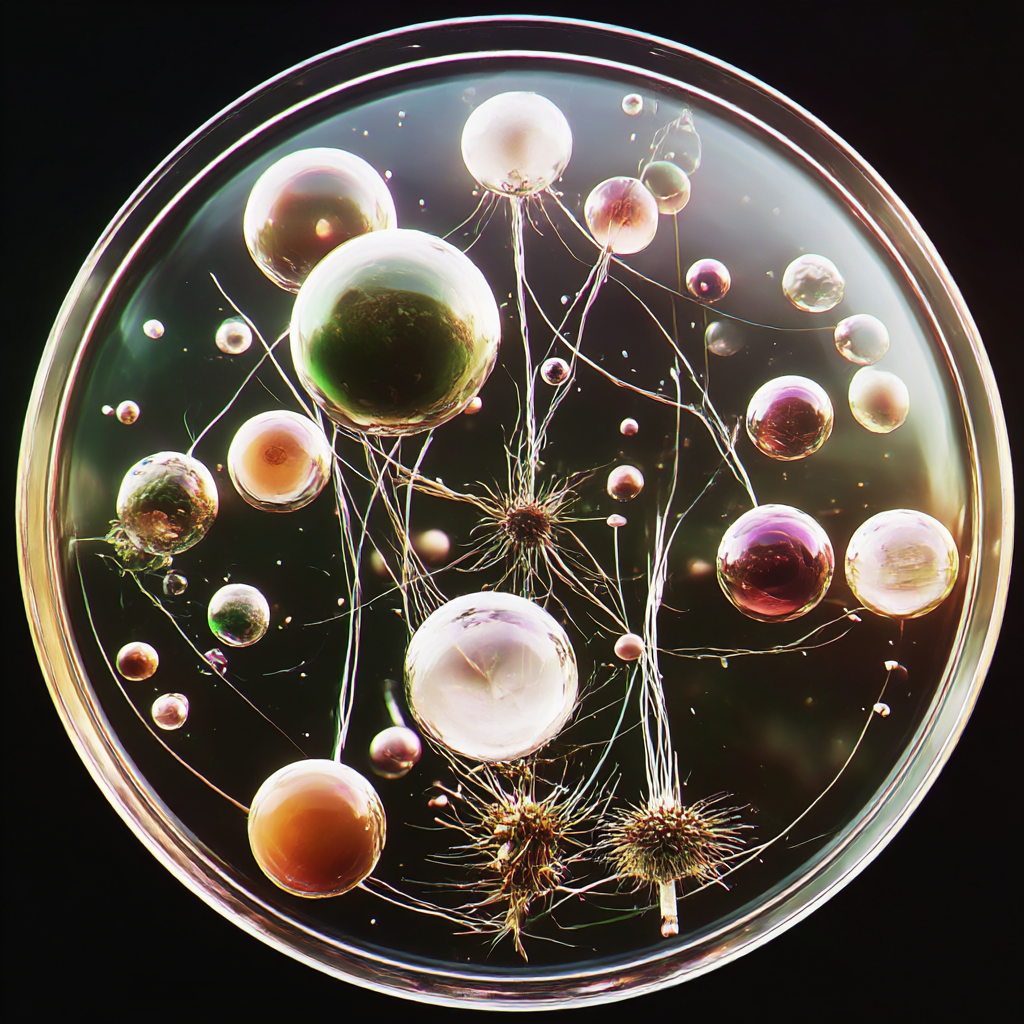
There’s a scientist doing remarkable work right now — Michael Levin — whose interviews are truly fascinating. He researches cellular agency, proposing that cells aren’t merely passive building blocks, but entities with their own agency that respond to broader patterns of intention coming from their environment — especially from neighboring cells. His work suggests that if we can learn how to decode and influence this cellular intelligence, we may eventually be able to regrow lost body parts — like teeth or limbs — in humans, much like certain animals already do.
To me, this sounds akin to organic nanotechnology. In fields working on synthetic nanobots, we’re struggling with fundamental issues: how to power them, how to make them aware of nearby bots, and how to program them to collaborate. These are huge energy and complexity hurdles. Yet our bodies already contain bio-nanobots — cells — that manage all this effortlessly. Each cell generates its own energy through mitochondria, communicates, coordinates, and builds. They are nature’s nanobots, and they’ve been solving these problems for millions of years.
What excites me is that these two disciplines — biological regeneration and synthetic nanotech — seem to be converging. It’s almost as if we’ve been designed, long ago, to self-assemble from cellular units, guided by embedded patterns. This brings to mind the idea of holographic repatterning — that there might be an invisible blueprint, a holographic field that organizes us into our current form.
It makes me wonder whether human morphology — two legs, two arms, ten fingers — is a kind of resonant ideal. Not a coincidence, but a recurring solution shaped by physics, biology, and environment. If that’s true, then it’s likely this same form might emerge elsewhere in the universe, on planets with similar gravity, atmosphere, and pressures. We may be the result of a kind of universal resonance — a self-organizing pattern optimized for survival, adaptability, and the building of society.

july 2025
Existential Tingle ...
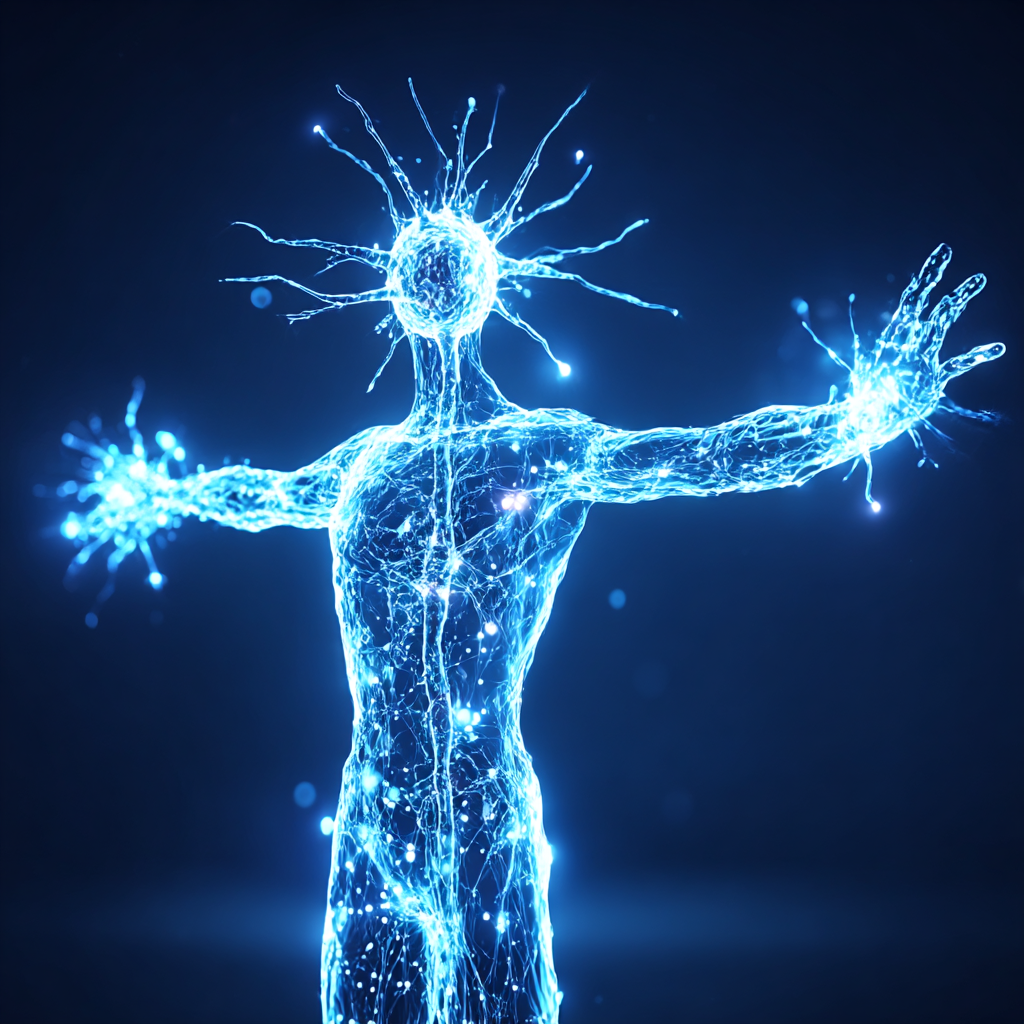
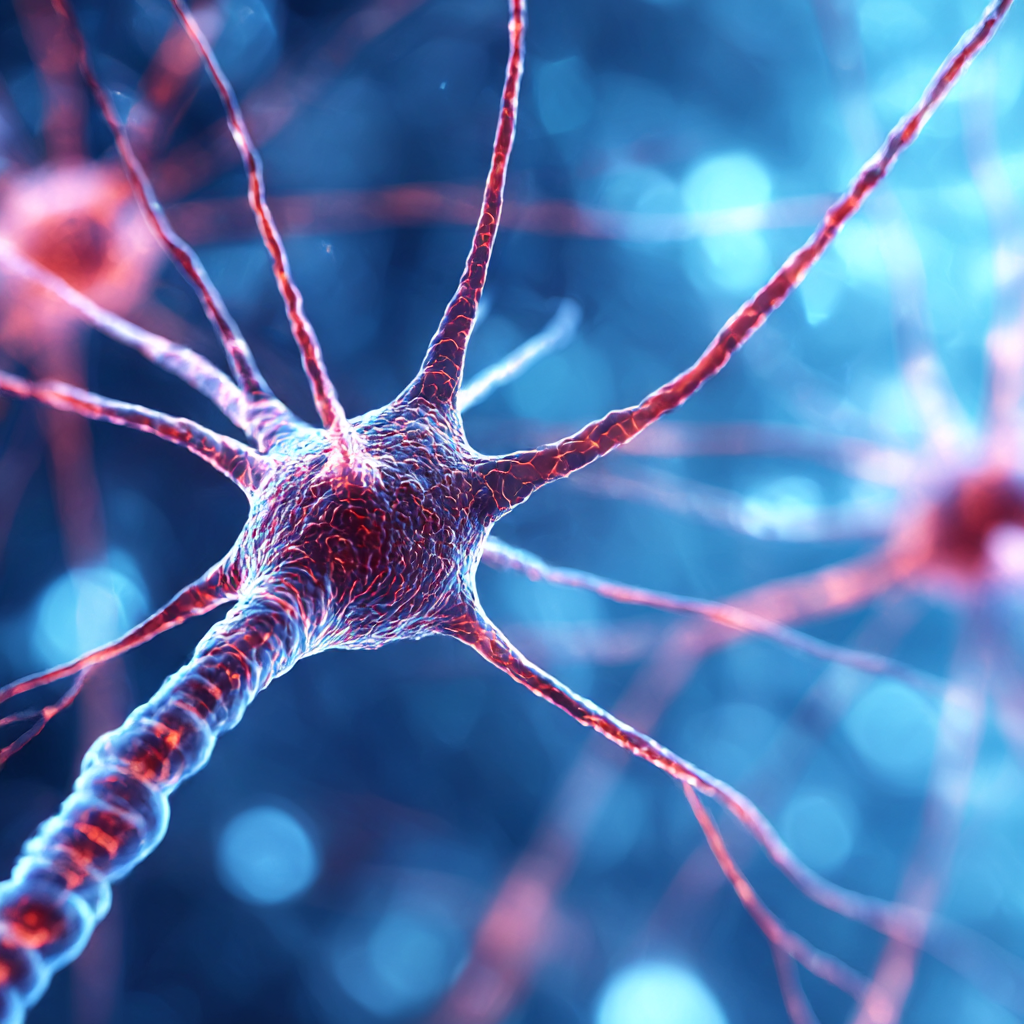
I’m experiencing this with part of my face — likely connected to a tooth infection — causing my right nostril and upper cheek, just adjacent to the nostril, to feel numb and occasionally tingle, as if something is crawling across it. It’s not painful, and I don’t really mind, but it’s very unsettling. Yet once the unease fades, I’m left with a striking awareness: my body is a delicate web of well-functioning nerves, constantly standing by to alert me to the world.
It’s as though I’m nested inside an intricate sensory machine — and when it glitches, like it is now on my face, it brings my attention to what I actually am within this system. In a strange way, I find it healthy to be reminded of that. For the most part, I feel quite at home in this body. My nerves are usually on my side, keeping me informed and oriented in reality. So when something goes awry, it’s not just discomfort — it’s an invitation to reflect on the nature of embodiment itself.
This subtle reminder — of how profoundly and quietly the nervous system anchors us in the world — feels profound. It’s a glimpse into the machinery that sustains experience, usually hidden beneath the threshold of awareness. I’m reminded that I’m not just a mind in a body — I am a living network of perception, riding inside a beautifully coordinated system that knows exactly how to feel.